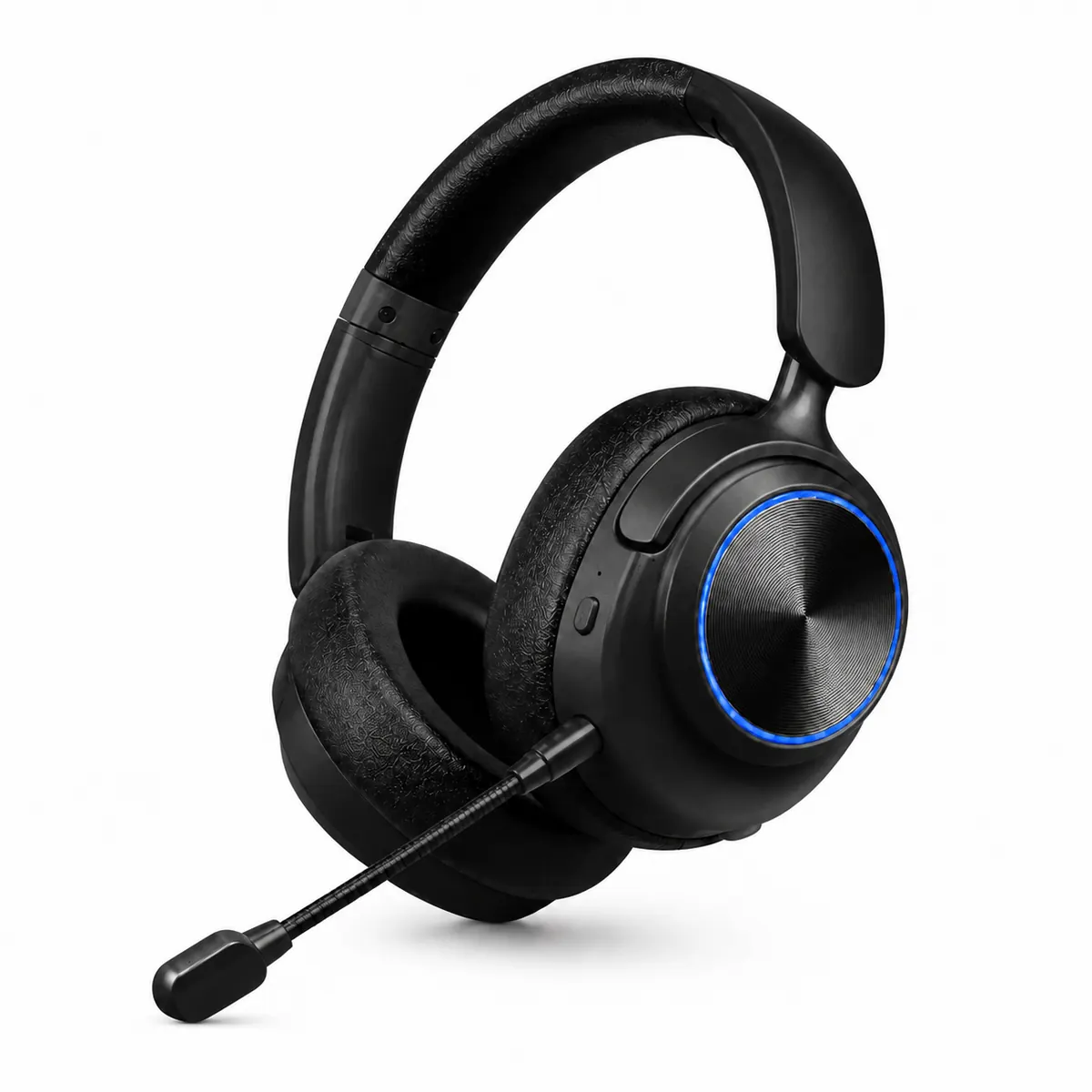
Confirm the wireless use case
Wireless gaming headset buyers should first define the target platform, retail channel and expected user scenario. A gaming brand may care about low-latency gaming positioning, while an importer or distributor may focus more on stable supply, packaging, regional certification and price range.
Choose between 2.4G, Bluetooth and dual-mode
For gaming channels, 2.4G receiver support is often requested for PC or console-style low-latency use. Bluetooth may be suitable for mobile and everyday listening. Dual-mode wireless gaming headset OEM projects should clarify whether the buyer needs 2.4G only, Bluetooth only or both modes in one private-label product line.
Match the H-series platform to the channel
JRT Audio wireless gaming headset references such as the 2026 X/G/M series plus H80, H60, H20 and H10 represent different visual and commercial directions. Buyers should compare appearance, microphone style, ear-cushion direction, battery target, control layout and packaging needs before selecting the final OEM platform.
Keep technical claims project-confirmed
Latency, range, battery life, receiver compatibility and microphone performance should be confirmed against the selected platform and approved sample. This keeps marketplace, distributor and retail communication accurate and avoids publishing unverified performance claims.
Review the sample like a buyer will use it
During sampling, check wireless pairing, microphone voice clarity, wearing comfort, headband pressure, control logic, charging interface, logo position, product color and packaging. These points matter more to repeat orders than a product photo alone.
Prepare a complete RFQ
For a faster reply, buyers should send target model, quantity, market, wireless mode, logo, color direction, packaging request, certification expectations, target price and sample deadline. JRT Audio can then recommend suitable H-series wireless gaming headset OEM platform directions.