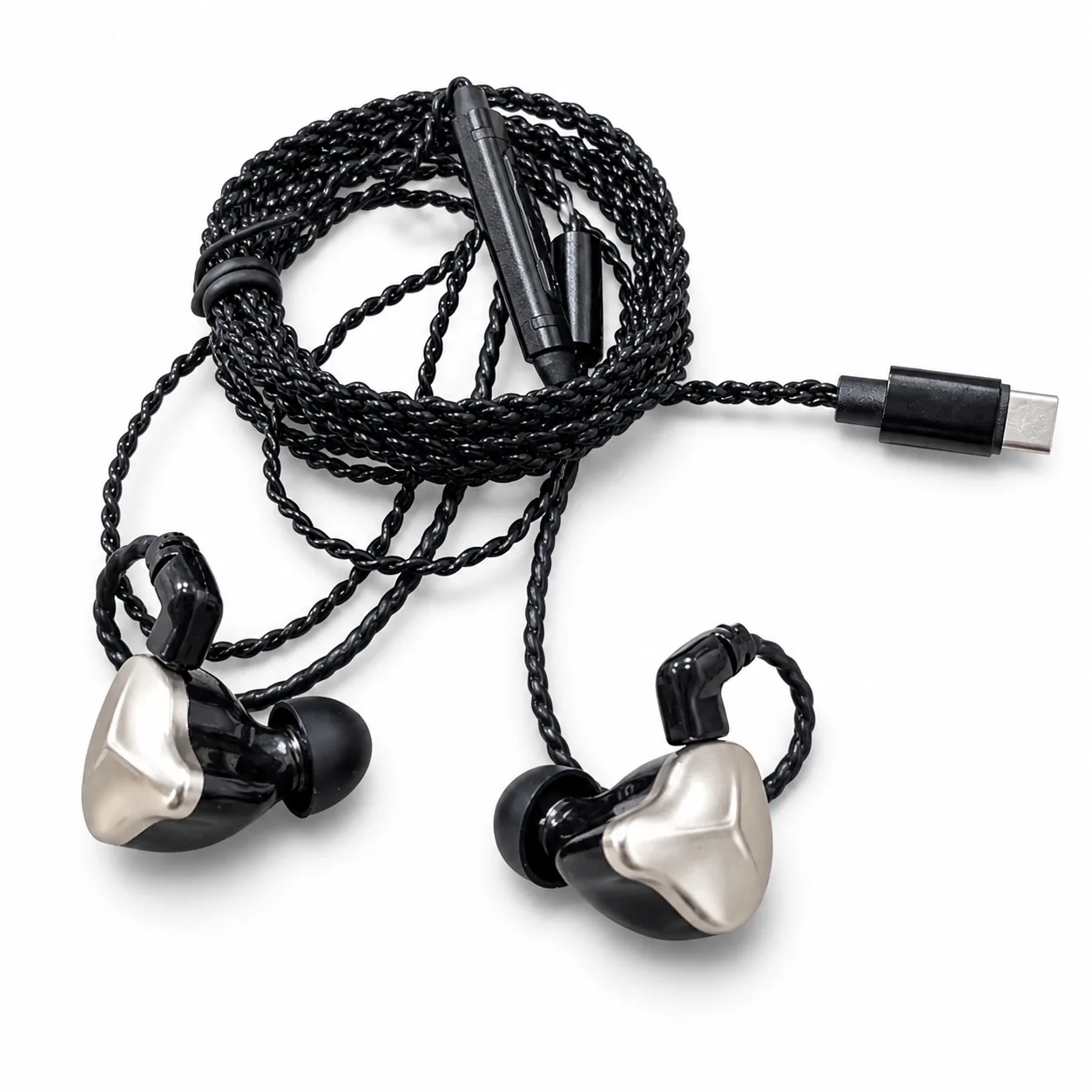
A private-label IEM project combines acoustic performance, fit, appearance, cable construction and retail presentation. Buyers obtain more reliable quotations when these choices are defined before sampling. This guide gives audio brands, distributors and importers a practical starting point.
Choose the product direction first
Start with the target customer and use case: HiFi listening, stage monitoring, gaming, mobile Type-C audio or a general consumer earphone. Define the target retail price, sound signature and required accessories. The factory can then recommend an existing shell and driver platform or identify genuine ODM work.
Shell material and finish
| Decision | Options to confirm |
|---|---|
| Material | ABS, resin, metal or hybrid construction, depending on the model. |
| Finish | Gloss, matte, plating, paint, transparent effects or decorative faceplates. |
| Branding | Logo position, printing method, laser marking and left/right identification. |
| Fit | Nozzle angle, ear-tip sizes, housing size and cable routing. |
Driver and acoustic tuning
Dynamic, balanced-armature and hybrid configurations have different cost and tuning possibilities. Ask for frequency-response data under defined test conditions, then evaluate the complete earphone with the intended ear tips, cable and filters. If DSP or a Type-C digital audio solution is required, confirm the DAC, ADC, microphone support, bit depth and sampling rate.
Cable and connector choices
Common choices include fixed cables, detachable 0.78 mm 2-pin connectors, MMCX, 3.5 mm analog plugs and Type-C digital audio cables. Confirm conductor construction, braiding, jacket material, microphone, controls, plug housing, strain relief and cable length. A premium cable should be evaluated for flexibility, microphonics and long-term connector stability.
Packaging and accessories
Define the retail box size, tray or pouch, ear-tip assortment, replacement filters, adapter requirements, manuals, labels and compliance marks. Packaging artwork should only be finalized after the approved product and accessory list is frozen.
A practical sample approval sequence
- Shortlist the shell and driver platform.
- Confirm connector, cable and control requirements.
- Evaluate fit, frequency response and listening performance.
- Approve finish, logo and color.
- Approve package artwork and a final pre-production sample.
What to send in an IEM RFQ
Include the target market, estimated quantity, target retail price, shell preference, driver direction, impedance and sensitivity targets, frequency response, connector, cable, microphone and control needs, package type, accessory list and compliance requirements.
Frequently asked questions
Can the shell color and logo be customized?
Yes. Available methods depend on the selected shell material and finish.
Can a Type-C cable support high-resolution audio?
Yes, when the selected digital cable and DAC/DSP solution support the required bit depth and sampling rate. Microphone support must also be confirmed if needed.
Can buyers request acoustic changes?
Yes. Driver, damping, filter, vent and DSP choices can be reviewed according to the selected platform and project target.