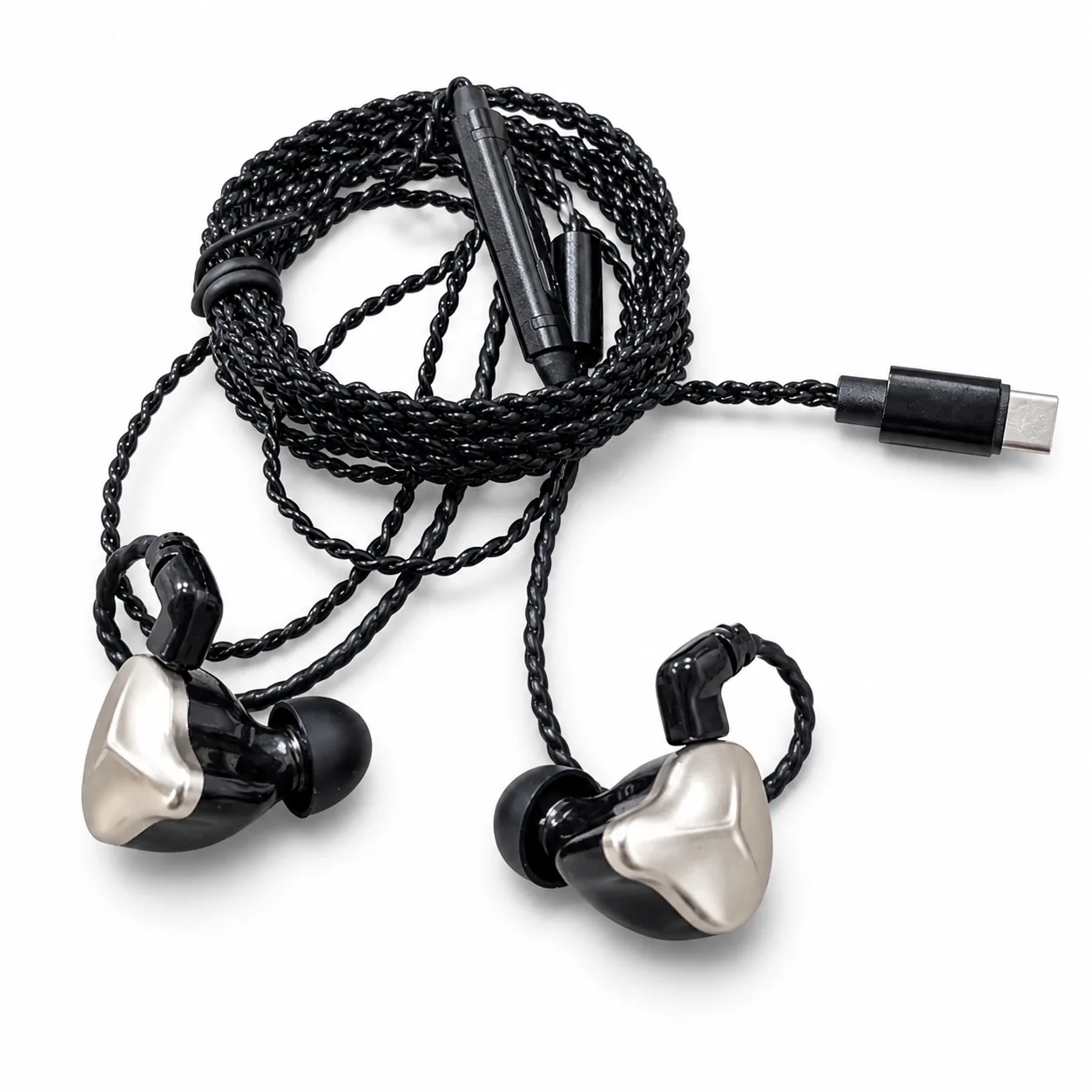
An OEM IEM manufacturer should do more than place a logo on an existing earphone. The right supplier helps a buyer choose a suitable acoustic platform, define the cable and connector, build representative samples, control production consistency and prepare packaging for the target market.
1. Start with the selling channel and target user
A stage-monitor product, a HiFi retail earphone and a Type-C digital IEM can use different structures and tuning priorities. Before requesting prices, tell the factory where the product will be sold, the expected retail level, preferred connector, microphone requirement and estimated order quantity.
2. Compare real model platforms
Ask for clear model references rather than a general capability statement. JRT Audio currently presents 13 private-label IEM platforms, including 3.5 mm, Type-C, single dynamic-driver and DD+BA directions. A shortlist makes sample evaluation faster and keeps the quotation tied to a defined product.
| Buyer requirement | What to confirm with the manufacturer |
|---|---|
| Connector | 3.5 mm, Type-C/DSP or detachable-cable direction |
| Sound target | Bass level, vocal position, treble control and intended use |
| Housing | Material, finish, color, logo area and wearing comfort |
| Cable | Core structure, jacket, length, microphone and control functions |
| Package | Retail box, inserts, accessories, languages and barcode needs |
3. Evaluate acoustic and engineering support
For a serious IEM OEM project, the supplier should be able to discuss driver configuration, impedance, sensitivity, frequency-response direction, acoustic filters and sample tuning. If a Type-C product is required, confirm the digital audio and DSP scope separately from the mechanical earphone design.
4. Use samples to lock the specification
Do not approve mass production from photographs alone. Test wearing comfort, channel balance, microphone function, cable noise, connector reliability, finish and packaging. For shortlisted models, two sample units per model are useful when the buyer needs an internal reference unit and a second unit for comparative listening or engineering review.
- Target market and sales channel
- Preferred model or housing direction
- 3.5 mm, Type-C or detachable cable
- Sound and microphone requirements
- Logo, color and packaging needs
- Estimated order quantity and target schedule
5. Check production and quality-control details
Ask how the approved sample becomes the production standard. The project documents should define the model, driver, cable, connector, cosmetic finish, accessories, package artwork and inspection requirements. Compliance scope should be confirmed for the destination market instead of assumed from a generic certificate list.
6. Compare quotations on the same specification
A low price can be misleading if another quotation includes a different cable, driver, microphone, package or accessory set. Require each supplier to quote against the same approved configuration and clearly separate sample cost, tooling or development cost, unit price and freight.
Questions to ask an IEM OEM factory
- Which existing platforms best match our target channel?
- What can be changed without new tooling?
- Can you support acoustic adjustment and sample validation?
- Which cable, microphone and connector options are available?
- What is the MOQ for our selected color and package?
- How will production be checked against the approved sample?
For current model options, see the JRT Audio OEM IEM manufacturer page. For planning commercial details, continue with the private-label IEM MOQ, samples, tuning and packaging guide.