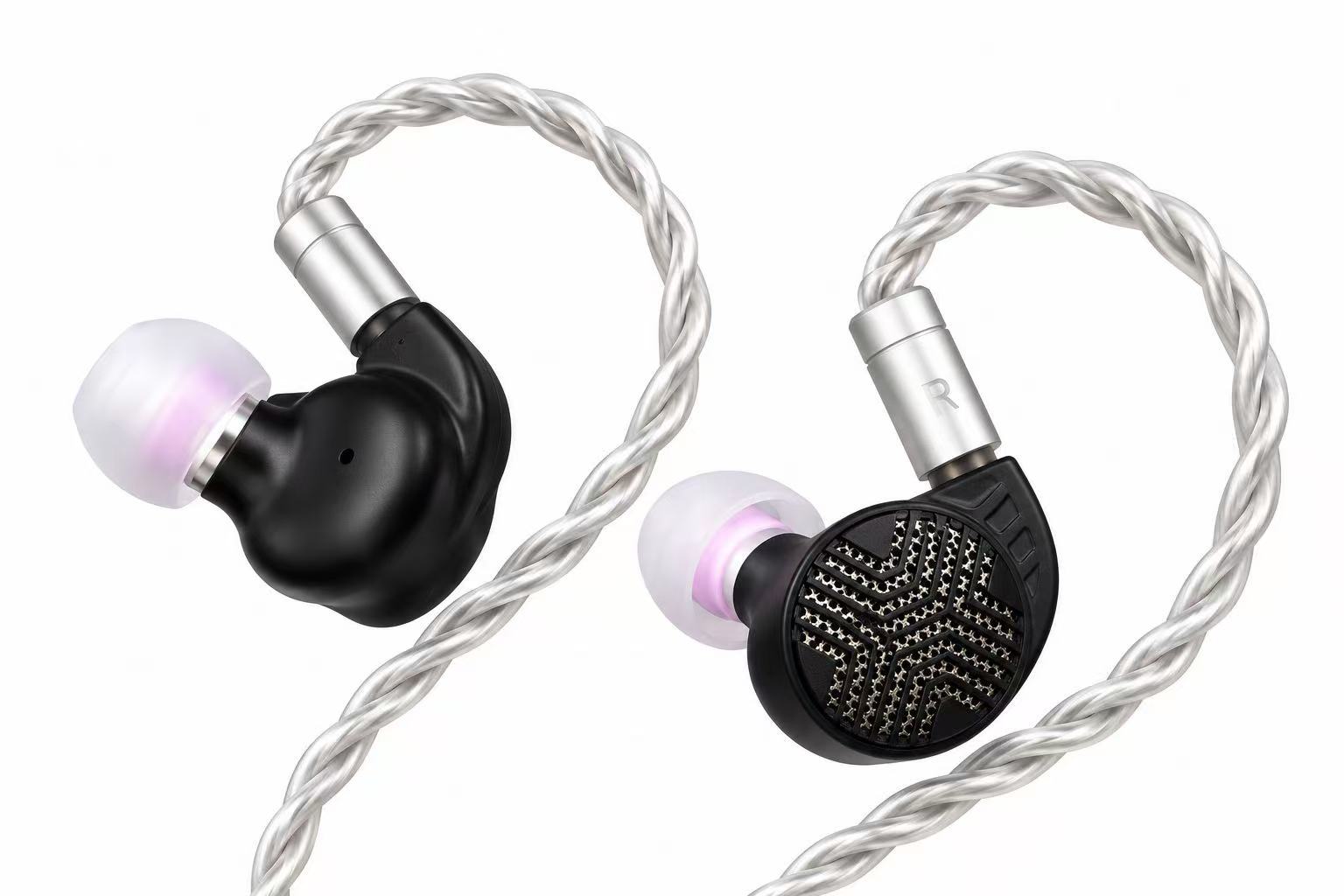
Sourcing a private-label HiFi IEM from China should begin with a product and verification plan—not only a target price. A buyer needs to choose the right acoustic platform, define the cable and connector, approve representative samples, confirm branding and packaging, and establish the quality checks that will control mass production.
1. Start with the market and use case
Describe the intended buyer, price position, listening style, target country and sales channel. A monitoring-focused product, a bass-forward consumer IEM and a planar-driver model should not be evaluated with the same brief. State whether the project needs 3.5 mm, Type-C/DSP, an inline microphone, detachable cable, retail packaging or specific accessories.
2. Compare the 9 current JRT IEM platforms
Use the current lineup as a shortlist rather than asking for every historical model. The active range combines seven SP-800-series directions with two established platforms.
SP-800
Sculpted translucent housing and detachable-cable platform.
SP-801
Translucent green housing with metal-faceplate direction.
SP-802
Metal-shell direction with detachable braided cable.
SP-803
Dark metal faceplate with red-accent design.
SP-805
Transparent housing and silver metal faceplate.
SP-806
Geometric silver faceplate and transparent housing.
SP-808
Professional planar-driver direction with ergonomic housing.
SP-202
Established Type-C digital IEM OEM platform.
SP-122-M
Established monitoring IEM platform with detachable cable.
For side-by-side images and model status, use the complete 9-model HiFi IEM guide. Buyers considering the planar direction can also review the SP-808 planar IEM OEM guide.
3. Send a quotation brief that can be priced
| RFQ field | What the buyer should provide |
|---|---|
| Model direction | Shortlist one to three current models and explain the intended positioning. |
| Quantity | Estimated first order and annual volume. The current MOQ reference starts from 3,000 pieces per model. |
| Sound target | Preferred bass, vocal and treble balance plus reference products when available. |
| Cable and connector | 3.5 mm, Type-C/DSP, microphone, control functions and detachable-cable requirement. |
| Branding | Logo file, preferred color, faceplate/housing direction and printing method. |
| Packaging | Box, inserts, accessories, languages, barcode and target-market requirements. |
| Compliance | Destination market and the compliance scope to be confirmed for the final configuration. |
4. Plan about 15 days for samples
Sample preparation is normally about 15 days after the model, functions, appearance, artwork and sample terms are confirmed. More development work may require additional time. The approved sample should become the reference for sound, appearance, function and packaging—not merely a sales demonstration.
During sample review, check fit, left/right balance, cable noise, connector stability, microphone and controls where applicable, surface finish, logo position, accessories and package protection. Record decisions in writing before mass production.
5. Verify the supplier and the production handoff
- Confirm the legal company identity, direct factory contact and current product scope.
- Ask which elements are existing platform options and which require new development.
- Define incoming-material, assembly, acoustic/function and final appearance checks.
- Confirm the golden-sample process and how changes are approved.
- Agree on packaging files, inspection standard, production schedule and shipment handoff.
- Confirm compliance documentation for the target market and final product configuration.
6. Compare total project fit, not only unit price
The lowest initial price can become expensive if the platform does not match the market, the sample is not representative, artwork changes are uncontrolled or the final inspection standard is unclear. Compare product fit, engineering communication, sample quality, documentation, QC process, packaging execution and delivery planning together.
Buyer questions
What is the MOQ for a private-label HiFi IEM project?
The current planning reference starts from 3,000 pieces per model. Final MOQ depends on model, color, cable, logo and packaging configuration.
How long does a HiFi IEM sample take?
Normally about 15 days after the configuration, artwork and sample terms are confirmed.
Which nine models are currently active?
SP-800, SP-801, SP-802, SP-803, SP-805, SP-806, SP-808, SP-202 and SP-122-M.
Send quantity, market and product direction.
JRT Audio can recommend current HiFi IEM platforms and reply with model options, MOQ, sample timing and quotation information.
EMAIL THE RFQ ↗