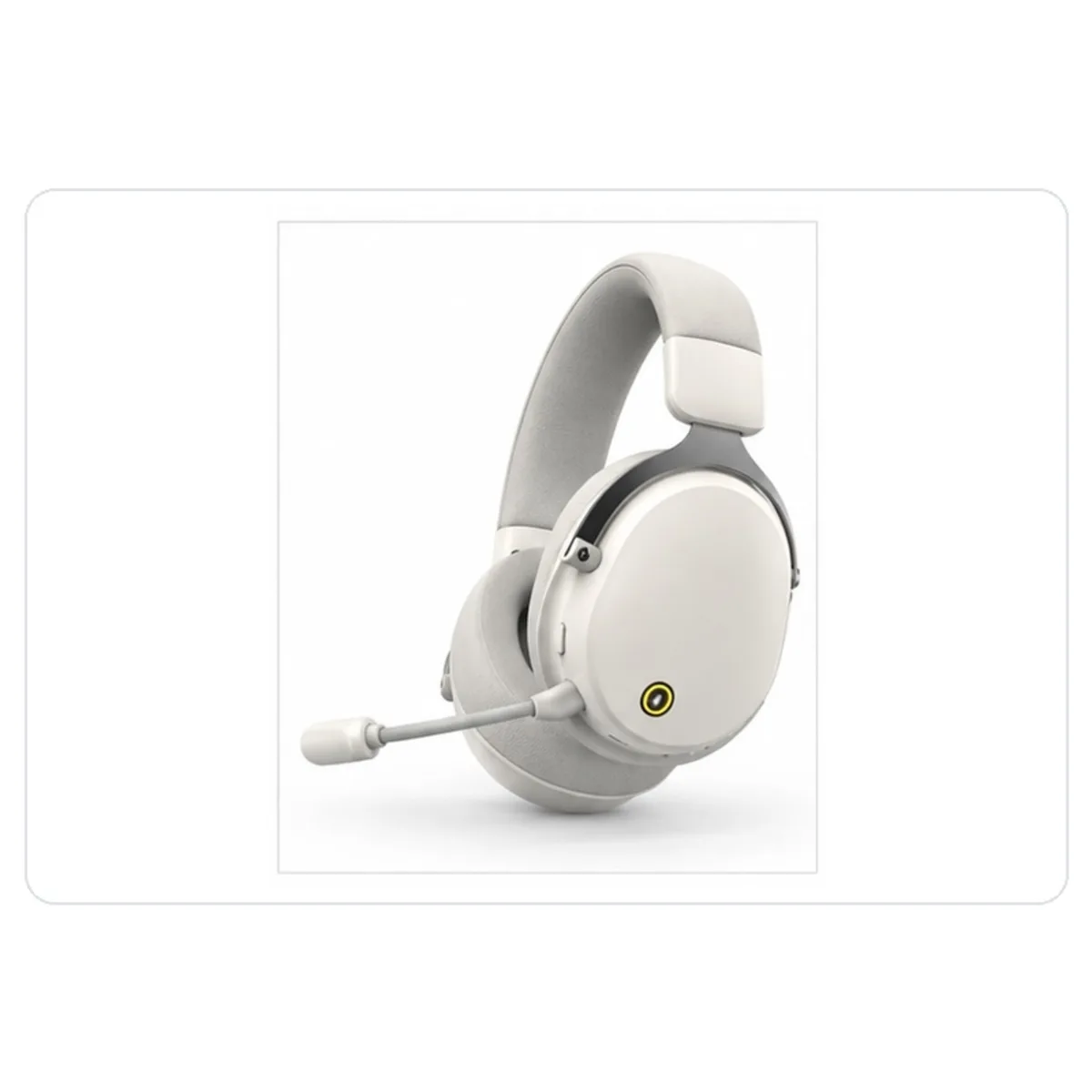
Choosing a wireless gaming headset for a private-label program is not only a matter of appearance or unit price. The platform must deliver stable 2.4G transmission, acceptable latency, clear team-chat pickup, useful battery life and consistent production quality. A good RFQ therefore compares the complete system rather than one headline specification.
1. Start with the required connection modes
For PC and console gaming, a dedicated 2.4G USB dongle is normally the primary low-latency link. Bluetooth adds value for phones, tablets and everyday audio. Some programs also require a wired fallback. Confirm which modes must be available at launch and whether switching between them should be automatic or controlled by a button.
2. Evaluate latency as a complete system
“Low latency” is meaningful only when the headset, dongle, firmware and target device are tested together. Ask for the measurement method and test conditions. During sample review, check game sound, voice chat and video lip synchronization. Stability at realistic distances and in a busy 2.4GHz environment matters as much as the best laboratory figure.
3. Match the acoustic direction to the market
Gaming buyers often expect clear positional cues, controlled bass and intelligible dialogue. A competitive title may need a different tuning direction from an entertainment headset. Define the driver size, target frequency response and whether EQ or DSP adjustment is available. Use the same ear pads and production materials during approval because seals and cushions affect the result.
4. Check the microphone, controls and monitoring experience
Confirm whether the boom microphone is fixed, detachable or retractable, and test voice pickup in a real room with keyboard and fan noise. Review mute logic, sidetone requirements, volume control, status prompts and LED behavior. Clear control labeling reduces customer-service problems after launch.
5. Compare battery claims correctly
| Item | What the buyer should confirm |
|---|---|
| Working time | Volume level, connection mode and RGB on/off condition. |
| Charging | Connector, input specification, full-charge time and use-while-charging behavior. |
| Standby | Automatic sleep timing and wake-up behavior. |
| Battery cell | Capacity, protection circuit, supplier consistency and required transport documents. |
6. Review comfort and mechanical construction
A headset that feels acceptable for five minutes may become uncomfortable in a two-hour session. Evaluate clamping force, headband range, ear-cup depth, cushion material, total weight and heat buildup. Run repeated hinge, headband, button and cable tests. If the target channel has a low return-rate requirement, define these checks before mass production.
7. Build OEM customization around a stable base
Logo printing, housing color, surface finish, RGB treatment, packaging and accessories should be confirmed against a stable platform. Avoid changing too many structural parts before the electronic and acoustic samples are approved. Separate cosmetic approval, functional approval and packaging approval so each change remains traceable.
8. Plan compliance and documentation early
Tell the supplier where the product will be sold. CE, FCC, RoHS, battery transport documents, labeling and local language requirements depend on the market and configuration. Certification scope should match the final hardware, wireless module, charger and packaging—not an unrelated reference model.
9. Use a staged sample plan
- Configuration sample: confirms wireless modes, controls, battery and microphone.
- Acoustic sample: confirms driver, tuning, cushions and microphone performance.
- Appearance sample: confirms color, logo and finish.
- Pre-production sample: confirms final BOM, packaging and labeling before release.
10. Send an RFQ that can be quoted accurately
Include target market, estimated quantity, required connection modes, device compatibility, battery target, microphone structure, preferred color, logo position, packaging, compliance needs and target delivery date. This allows the factory to recommend an existing platform or identify genuine ODM work.
Frequently asked questions
Is 2.4G better than Bluetooth for gaming?
A dedicated 2.4G dongle is generally preferred for low-latency PC and console use, while Bluetooth is useful for mobile and everyday audio. Dual-mode products cover both use cases.
What MOQ should buyers expect?
JRT Audio’s typical starting point is 3,000 pieces per model, subject to color, packaging and project configuration.
How long does sampling take?
A typical configuration sample takes 7–10 working days after requirements and commercial terms are confirmed. New tooling or major firmware work can extend the schedule.